
Setting Realistic Expectations
Hair loss treatments — including Procerin — are not overnight solutions. Hair grows approximately half an inch per month, and follicles that have been miniaturized by DHT need time to recover. The most common mistake men make is quitting too early. The 90-day money-back guarantee exists specifically because meaningful results take at least that long to become visible.
- DHT-driven hair loss (androgenetic alopecia)
- A progressive, hereditary condition where dihydrotestosterone miniaturizes scalp hair follicles over time. Management — not cure — is the realistic goal of any current treatment, natural or pharmaceutical.
Month-by-Month Timeline
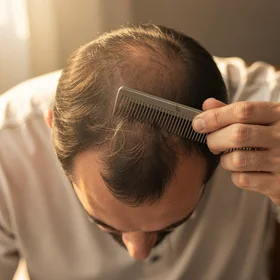
Based on Procerin's IRB-approved clinical study data and typical user experience, here's what to expect when using the tablets + XT foam combination consistently:
Weeks 1–4: Foundation Phase
No visible changes yet — and that's normal. The natural DHT-blocking ingredients are accumulating in your system and beginning to inhibit 5-alpha-reductase activity. Some men notice a temporary increase in shedding during this phase (existing weak hairs being pushed out by new growth). This is not a sign that the product isn't working.
Weeks 4–8: Reduced Shedding
Most men notice the first concrete sign: fewer hairs on the pillow, in the shower drain, and on their hands when running fingers through their hair. Shedding reduction was the most commonly reported early benefit in Procerin's clinical study — 87% of participants reported it.
Months 3–6: Early Visible Improvement
This is the window where visible changes begin to appear. Thinning areas may look denser as miniaturized follicles begin producing thicker, longer hairs. The hairline and crown typically respond first. Progress is gradual — comparing photos from month 1 to month 4 is more useful than checking the mirror daily.
Months 6–12: Continued Progress
Hair continues to thicken and fill in. The full effect of Procerin's DHT-blocking action takes 9–12 months to manifest. Men who see early improvement typically continue to see incremental gains through the first year. After 12 months, results tend to stabilize — the goal shifts from improvement to maintenance.
Best For: Who Sees the Strongest Results
Procerin's effectiveness depends heavily on the stage of hair loss when treatment begins. The earlier you start, the more follicles are still active and responsive to DHT reduction.
Ideal Candidates
- Men in Norwood stages II–IV — visible thinning at the temples, crown, or diffuse areas, but still have active follicles
- Men who notice increased shedding — catching it early gives the best chance of maintaining density
- Men who want a natural approach — avoiding the side effect profile of prescription finasteride
- Men willing to commit to 90+ days — consistency is the single biggest predictor of results
Less Ideal Candidates
- Norwood V or higher — when follicles have been dormant for years, DHT blocking has limited ability to reactivate them. Hair transplant surgery is typically the more realistic option at this stage.
- Non-DHT hair loss — alopecia areata (autoimmune), telogen effluvium (stress/illness), traction alopecia (physical pulling), or medication-induced hair loss require different treatment approaches.
- Women — Procerin is formulated specifically for male pattern hair loss. Female hair loss involves different hormonal pathways.
Maximizing Your Results
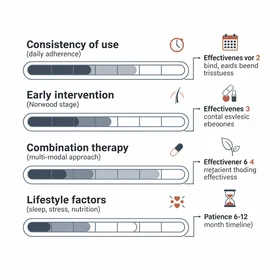
Based on the clinical study protocol and user feedback, these factors correlate with stronger outcomes:
- Use both tablets AND foam. The combination approach showed stronger results than either product alone. The tablets reduce DHT systemically; the foam delivers concentrated support at the follicle level.
- Take the tablets daily — don't skip. DHT blocking requires consistent inhibition of 5-alpha-reductase. Missing days allows DHT levels to rebound.
- Apply foam to clean, dry scalp. Oil and product buildup reduce absorption. The Scalp Therapy Shampoo is designed to optimize this.
- Take monthly progress photos. Same lighting, same angle. Daily mirror checks are unreliable because changes are too gradual to perceive day-to-day.
- Give it the full 90 days. If you see zero improvement after 90 days of consistent use, use the money-back guarantee. But don't quit at week 6 — that's too early to judge.
Cons & Considerations
- No treatment is a cure. Procerin manages DHT-driven hair loss — it doesn't permanently fix it. If you stop treatment, hair loss will gradually resume as DHT levels return to baseline.
- Results are not guaranteed. The clinical study showed 87% of participants benefited, but that means 13% did not see meaningful improvement. Genetics play a major role.
- Advanced hair loss responds poorly. If your follicles have been dormant for 5+ years, no topical or oral DHT blocker is likely to restore them. Procerin works best when started before significant follicular death. For more on what stage of loss responds best to treatment, getprocerin.com breaks down both OTC and Rx options by Norwood stage.
- Patience required. The average timeline to visible results is 3–6 months. If you need faster results, discuss prescription options (finasteride, minoxidil) with a dermatologist. For the science behind how Procerin's DHT-blocking mechanism works, see our Science page.
Ready to start? Use code REMEMBER at checkout on procerin.com for 20% off + free shipping. Every order includes a 90-day money-back guarantee — so there's no financial risk in finding out if Procerin works for you.